Dispatch from a Happy Harbor
30.iv.26
»And now the happy harbor is in view,« Virgil has Aeneas sigh with relief as his fleet reaches the coast of Apulia:
Minerva’s temple then salutes our sight,
Plac’d, as a landmark, on the mountain’s height.
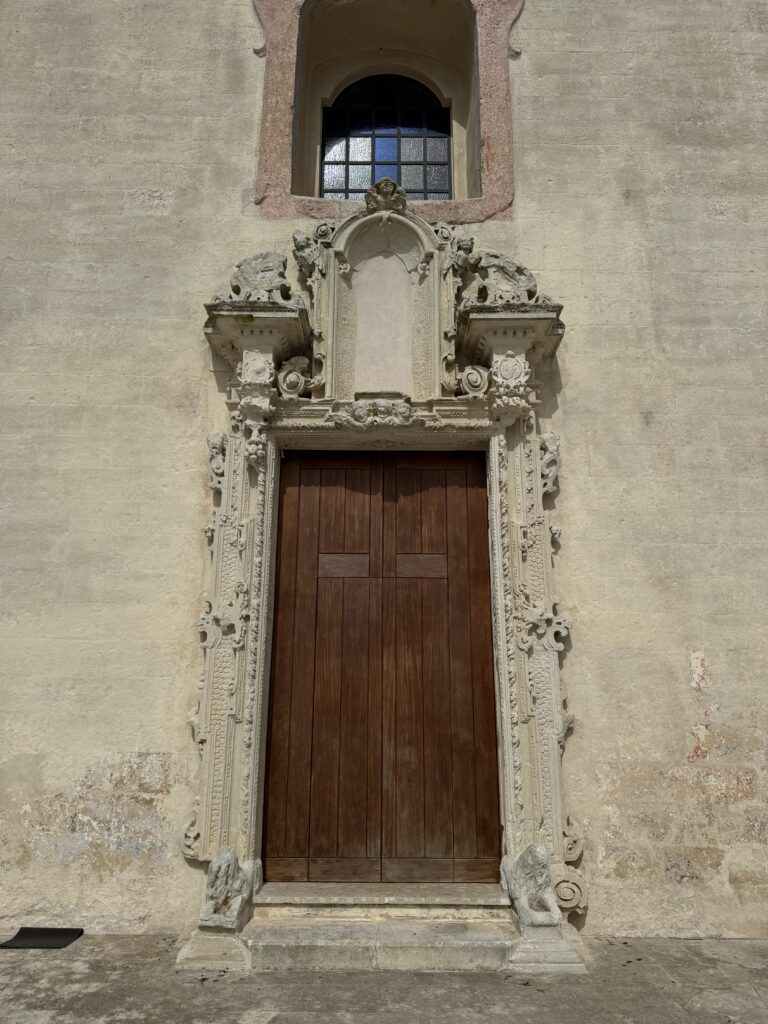
I need not »furl« any sails, nor are »curling waters« roaring around »galleys.« But I have retreated with the page proofs of my new novel to a monastery a short walk from Castro, the stronghold on which Aeneas and his crew set eyes some 3,200 years ago. They were greeted by Minerva, we are welcomed by Lady Athena, custodian of the convento once built by Franciscan monks as a refuge in plague-ridden Europe. Plundered four centuries later, then turned into a tobacco factory, the monastery was rescued from neglect by her and her husband as one millennium gave way to another, and transformed into an arc of honey-colored stone — filled, as far as I am able to tell, with practically every artifact needed to save human culture should the world experience a new flood, including fourteen tons of printed matter.
At dawn, a drowsy walk takes me along corridors walled with floor-to-ceiling bookcases whose mesh screens turn vertical titles into moiré puzzles, down stairs guarded by African figurines and lined with textiles from Central Asia, across the commanding courtyard, through a back gate, and eventually into the olive grove, where the earth, still moist from the night’s drizzle, quickens the senses. The saline breeze from the sea makes the leaves quiver with what seems muted laughter at my expense.
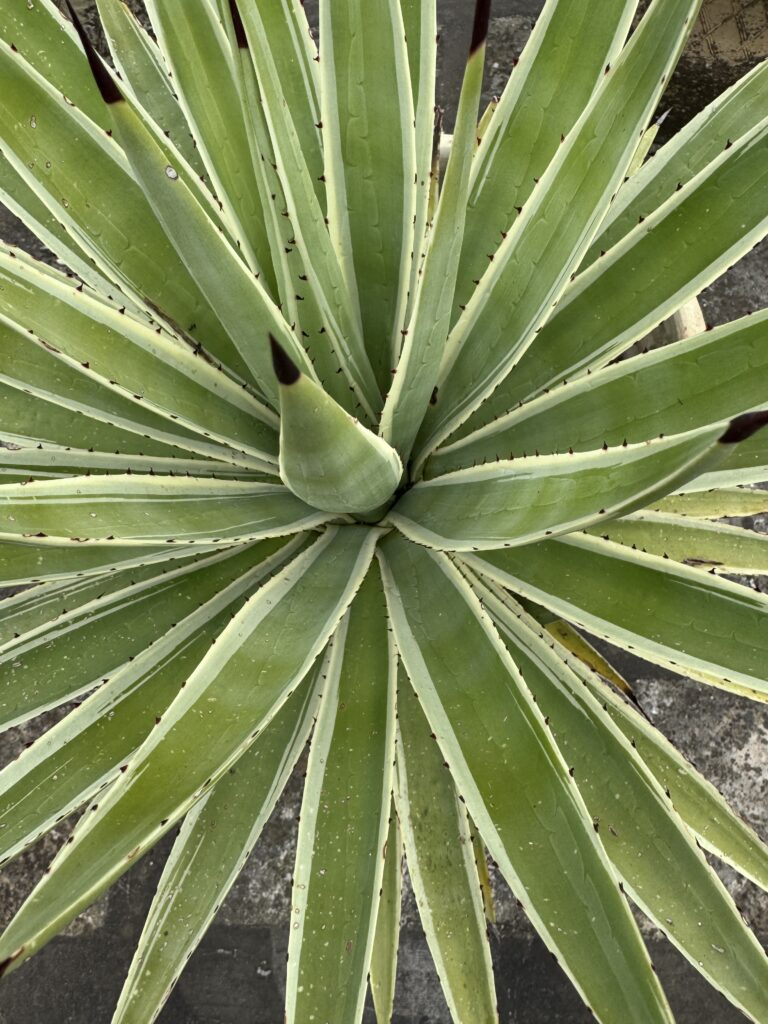
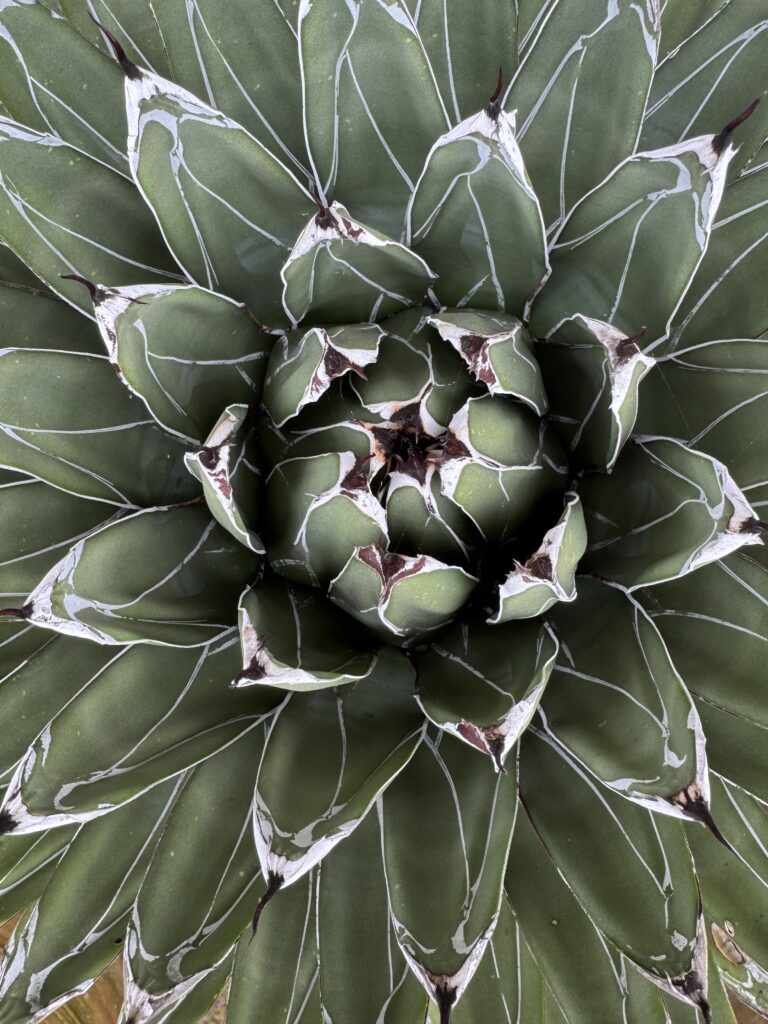
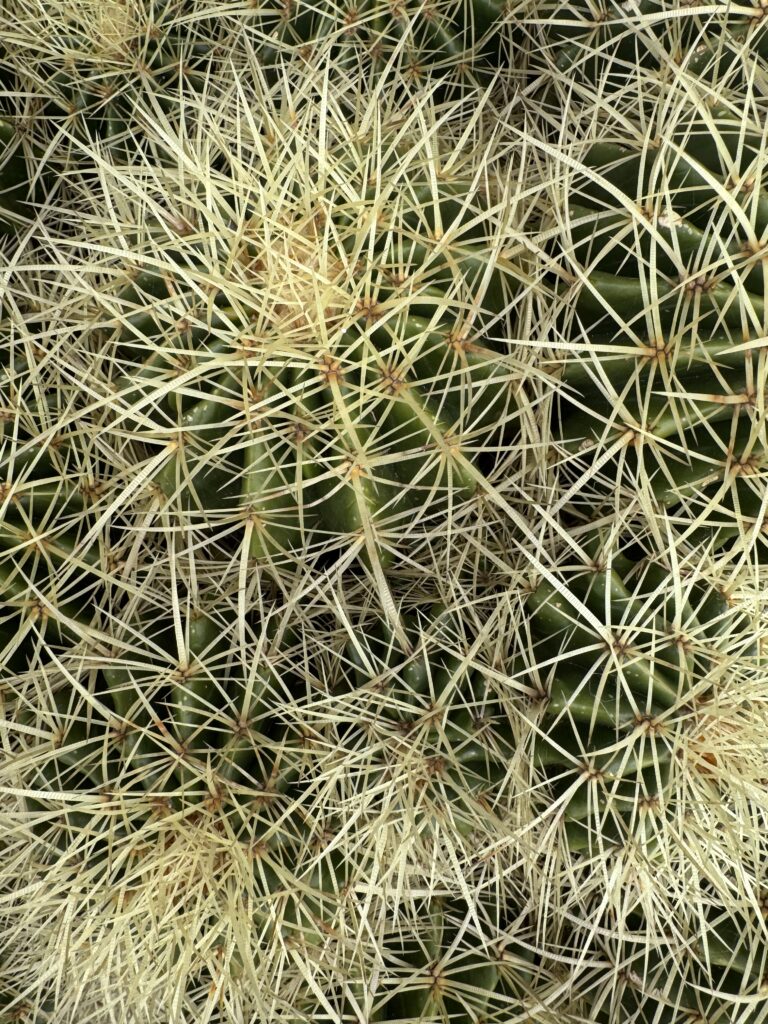
After a morning spent in the study, supervised only by The Duke, the household’s moving snowdrift of a dog, and Pedro, his half-blind, coffee-colored sidekick, there is lunch, then a visit to the cacti on the roof garden. Oh, the cacti! Cranky and cantankerous, bulbous and haughty, they resemble nothing so much as the words I am trying to cuddle downstairs. Further proofreading is adjourned in the late afternoon. There is espresso and papers in a corner or drinks by the pool. Or trips to the neighboring village, to bars, to the sea. As night descends, dinner brings longed-for company and indulgences, as well as a scattering of stars across the tarry sky.
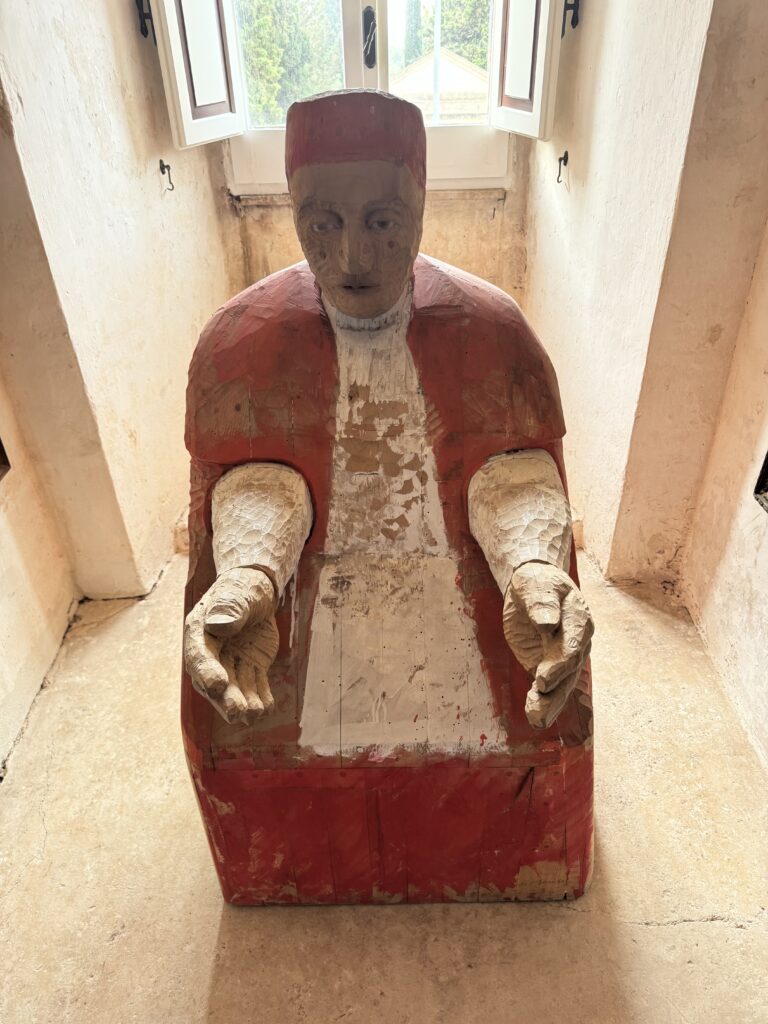
After what feels like an eternity but is not even a week, fortified by the convent’s resplendent solitude, I dispatch my cactoid words, wishing them untold — and injury-free — encounters on their journey elsewhere. Or as Dryden has it (with minor tweaks allowed) in his 1697 translation of The Aenid, discovered one morning in an alcove guarded by a wooden cardinal in scarlet robe, whose empty giant slabs of hand were extended as if to bid farewell, much like the »two tow’ring rocks« that once did the opposite, beckoning Aeneas into a safe haven:
Breathe on their swelling sails a prosp’rous wind,
And smooth their passage to the ports assign’d!